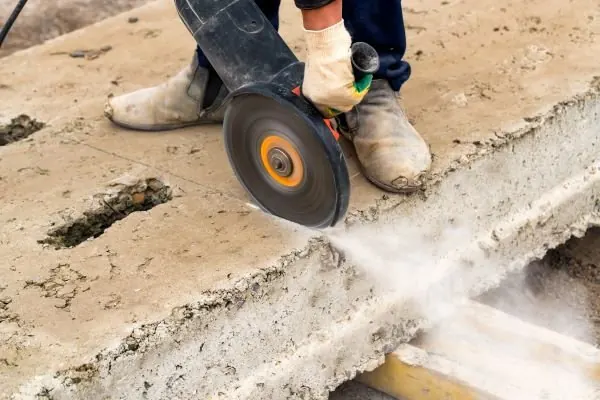
Saw cutting covers three different jobs
Concrete saw cutting means different things depending on the job. On a new slab, it means cutting control joints at the right time so the slab cracks where you want it to. On an existing slab, it means cutting openings for drains, pipes or pits. On a removal job, it means cutting clean, straight lines so the old concrete can be broken out without damaging what stays.
We arrange concrete saw cutting across Sydney for homeowners, builders, plumbers and landscapers, as part of a bigger concreting job or as a stand-alone service.
Control joints in new concrete
Concrete shrinks as it dries. If nothing controls where that shrinkage goes, the slab cracks randomly. Control joints are deliberate weak lines that let the slab crack neatly in a straight line beneath the cut, where it is hidden.
Timing
Timing matters. Cut too early and the blade tears the surface and pulls stone out. Cut too late and the slab may already have cracked on its own. On hot, windy Sydney days the window can come much sooner than on a cool, overcast day. The concreter watches the slab and cuts when it is ready.
Spacing and depth
Joint spacing depends on the slab thickness and shape. Long narrow paths need joints across them at regular intervals. Driveways and slabs need joints in both directions, plus joints at corners and where the shape changes. Depth is a proportion of the slab thickness, set so the slab cracks along the cut.
Cut-outs and openings
Plumbers, electricians and landscapers often need openings cut into existing concrete: a trench for a new drain, a pit opening, a hole for a downpipe connection, or a channel for conduit. Clean saw cuts keep the opening tidy and stop cracks spreading into the slab you are keeping.
Before cutting, services need to be located. Request plans through Before You Dig Australia, and know where your own pipes and cables run. Cutting into structural slabs, suspended slabs or post-tensioned slabs needs an engineer's advice first.
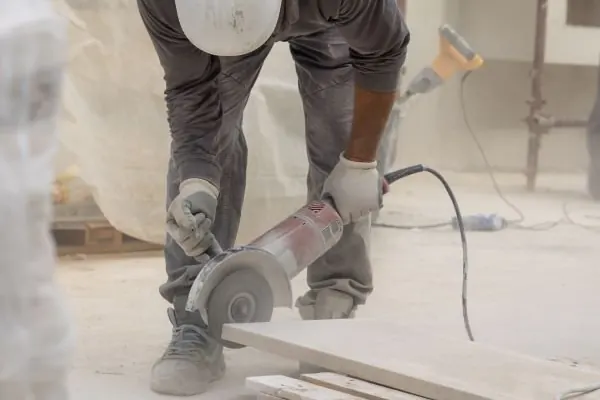
Cutting for removal
When part of a driveway or path is being replaced, cutting a straight line between the old and new sections means only the damaged part is removed and the new concrete meets a clean edge. This is common when a section near the garage or kerb has sunk, or where tree roots have lifted one panel.
Dust, noise and water
Concrete contains crystalline silica. Breathing the fine dust from cutting can cause serious lung disease, so cutting must be controlled. SafeWork NSW expects controls such as water suppression or on-tool dust extraction, and suitable respiratory protection. Wet cutting produces slurry, which should be collected and not washed into the stormwater system. Saws are also loud, and council and EPA noise rules can limit working hours near homes.
Pricing saw cutting
Saw cutting is usually priced by the length and depth of cut, often with a minimum charge. Thick or heavily reinforced slabs cost more. Joint cutting on a new slab is often included in the concreting price. The price guide covers concrete planning bands, and the quote should list cutting separately. See concrete driveways and concrete slabs for how cutting fits into a new pour.
Planning cuts with other trades
On renovation jobs, saw cutting is often the first step for a plumber, drainer or electrician. Mark the cut lines clearly, confirm the depth needed, and agree who breaks out and removes the cut section and who reinstates the concrete afterwards. A clean straight cut with a planned patch looks far better than a jagged hole broken out with a hammer, and stops cracks running into the rest of the slab.