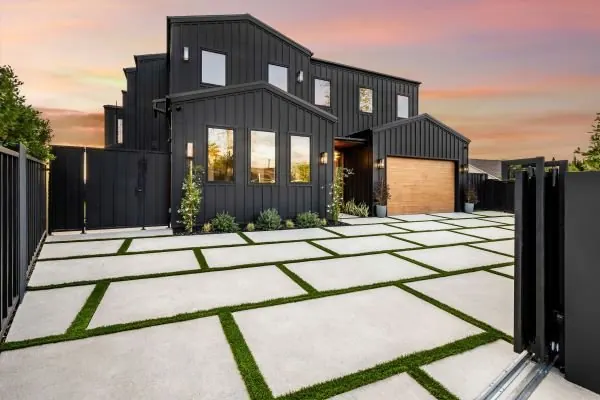
Concrete driveways that suit Sydney blocks
A concrete driveway is the surface most Sydney houses already have and the one most people replace it with. It handles daily car traffic, it can be laid on almost any block, and it can be finished plainly or dressed up. What decides whether it lasts is mostly underneath: the base, the reinforcement, the thickness and the falls.
We arrange driveway work across Sydney, from narrow terrace parking pads in the Inner West to long sloping driveways on the North Shore and wide double driveways on new estates in Western Sydney and the Hills District. The concreter measures it, checks the levels at the garage and the kerb and puts the job in writing.
Replacing an old driveway
Most driveway jobs in established suburbs start with something already there. Common reasons people replace a driveway:
- Cracks that have opened up or stepped, so one side sits higher than the other.
- Sinking near the garage or kerb, often where trenches for services were backfilled poorly years ago.
- Tree root lift, especially from street trees and large backyard trees close to the driveway edge.
- Water running the wrong way, pooling at the garage door or flowing towards the house.
- Worn or stained surfaces, or old pavers that have spread and rutted.
The old surface is broken up, loaded out and taken away. Then the ground is excavated to the right depth, any soft spots are dug out and replaced, and fresh road base is laid and compacted. This part of the job is where cheap quotes save money, and where a driveway that cracks in two years usually started.
How the driveway is built
Formwork and levels
Timber or steel forms are set along the edges at the finished height. The concreter sets falls so water drains to the street, a garden bed or a drainage grate, never towards the house or the garage. Where the driveway meets the garage slab, a path or the council crossing, levels have to line up, and that is often the hardest part of the job.
Reinforcement
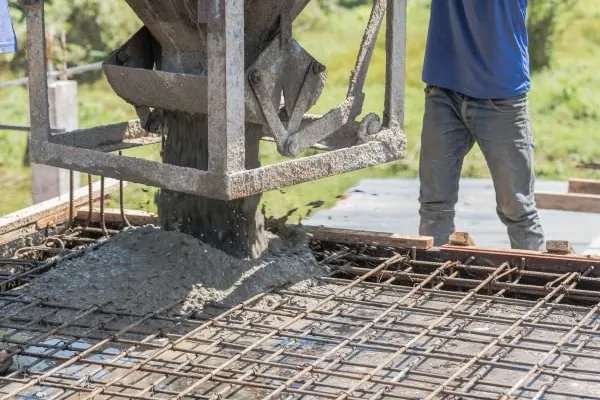
Steel mesh or bar is placed on plastic or wire chairs so it sits within the slab rather than on the ground. Mesh lying on the dirt does very little. Across driveways on reactive clay, the reinforcement and the thickness matter even more.
Pour and finish
The concrete arrives by truck, and if the truck cannot back close enough it is pumped. It is screeded, floated and finished. A broom finish gives texture for grip. Exposed aggregate is washed back to reveal the stone. Coloured concrete either has oxide in the mix or a colour hardener applied to the surface. Stencilled finishes press a pattern into coloured concrete to imitate pavers.
Joints and curing
Control joints are cut with a saw once the concrete can take it without the edges ravelling, or tooled in while it is fresh. They give the slab a planned place to crack. The concrete is then kept moist or covered, because a Sydney summer afternoon can dry the surface far too quickly. See our saw cutting page for how joint timing works.
Choosing a finish
Plain, coloured and exposed aggregate are the three finishes we are asked about most. Each has trade-offs in grip, heat underfoot, how well it hides marks and how easily it can be patched later. Our comparison guide goes through them in detail, and the price guide shows how each one changes the cost.
The crossover and the council
The section between your boundary and the road, called the driveway crossing, crossover or layback, sits on council land. Most Sydney councils require an application before it is built or rebuilt, and many issue the levels it must be built to. Some councils build crossings themselves or keep a list of approved contractors. Ask the concreter whether the crossing is included, and check with your council before you book the pour.
Getting the quote right
A good driveway quote names the area in square metres, the thickness, the concrete strength, the reinforcement, the finish, the base preparation and the disposal of the old surface. It should also say who protects the new driveway from cars, bins and foot traffic while it cures. If any of the items in the checklist below are missing, ask before you sign.