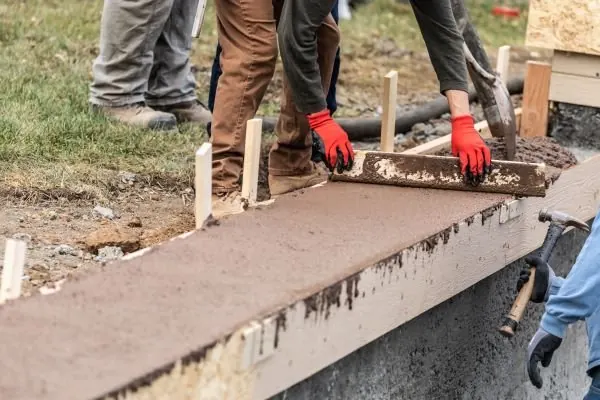
Concrete work in the Inner West
The Inner West has some of Sydney's oldest housing and some of its tightest building sites. Narrow terraces with shared walls, courtyards behind the kitchen, single side passages and rear lanes all shape how concrete gets in and where it can go. We arrange concrete work across the Inner West Council area, from Balmain and Leichhardt to Newtown, Marrickville, Dulwich Hill and Ashfield.
Typical Inner West jobs
- Rear-lane parking pads behind terraces, where the lane level, the gate and the backyard all have to line up.
- Courtyard slabs replacing broken pavers or old concrete, with falls to a pit so the courtyard drains.
- Side passages on semis and cottages, often the only route for bins, bikes and stormwater.
- Front paths to the door, small but visible from the street.
- Slabs for studios and outbuildings in larger backyards.
Ground and drainage
Much of the Inner West sits on clay weathered from shale, lying over sandstone. Closer to the harbour, around Balmain and Birchgrove, sandstone sits near the surface and excavation can hit rock quickly. Clay soils hold water and move with moisture, so slabs and paths need a properly compacted base and joints in sensible places.
Drainage is the issue we hear about most. Older properties often have courtyards that fall towards the back door, or old clay stormwater lines that are cracked or blocked. A new slab is the right time to set falls to a pit and check where the water goes. Stormwater from your property should go to the street or the approved system, not onto a neighbour's land.
Access
Access drives price in the Inner West more than anywhere else in Sydney. If a concrete truck can pull up to a rear lane gate, the job is straightforward. If the only access is through the house, concrete is pumped with a line pump or a boom. Long, narrow side passages mean barrowing, which takes time. Lanes can be narrow, shared and busy, so trucks and pumps need careful positioning, and sometimes council permits apply for working from the road.
Heritage and council
Large parts of the Inner West are heritage conservation areas. Work at the back of a terrace is often less restricted than work visible from the street, but new driveway openings, front paths and front fences in conservation areas can need Inner West Council approval. A new crossing from a street or lane is on council land and normally needs an application. Check with Inner West Council before work starts.
Older brick walls
Terraces and cottages here are mostly solid brick, often on a damp-proof course a little above ground. When a path or courtyard is poured against the wall, the finished level must stay below the damp-proof course, weep holes and sub-floor vents. Raising the ground against old brickwork is a common cause of damp problems. The concreter will check levels before setting the forms.
Finishes that suit the area
Plain broom-finished concrete suits most Inner West courtyards and paths and is the easiest to patch if plumbing work is needed later. Exposed aggregate in warmer tones works well with brick and sandstone. Honed or polished concrete is popular for kitchen extensions that open onto the courtyard. See our driveway finish guide for the trade-offs.
Getting a quote in the Inner West
Send photos of the area and the access from the street or lane. Mention if the house is in a conservation area or if a building approval is involved. The concreter will measure, check levels and access, and price the work in writing. Planning ranges are on our price guide, and the footpaths and slabs pages explain how those jobs are built.