Concrete company Sydney: what we do and how it works
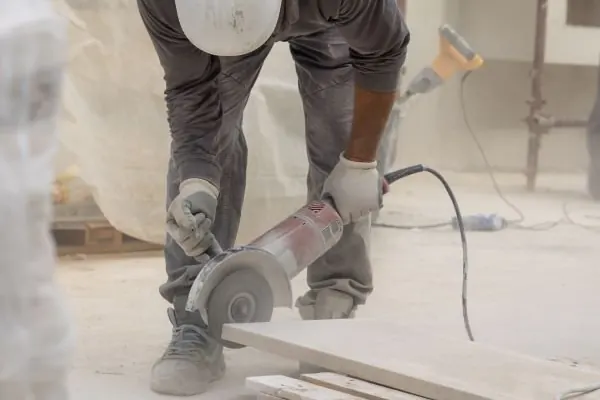
Concrete Company Sydney takes enquiries for residential and light commercial concreting across Sydney and passes each job to an independent local concreter who measures it, quotes it in writing and does the work. We cover new and replacement driveways, commercial driveways and car park pavements, house and shed slabs, footpaths, concrete retaining walls, pool surrounds, polished concrete and concrete saw cutting.
You get one phone number and one form, rather than ringing around a list of concreters in Sydney and trying to compare quotes that each describe a different job. When you call, we ask what is being poured, roughly how big it is, what is there now and how a truck or a pump will get to it. That is enough for a concreter to plan the site visit.
Why Sydney ground matters before the first barrow
Sydney is not one kind of ground. Across much of Western Sydney and the Hills District, houses sit on clay weathered from shale. That clay swells when it is wet and shrinks in a dry summer, so a slab or driveway on it needs a well-compacted base, properly placed reinforcement and control joints in the right places. Ridges around the North Shore and parts of the Eastern Suburbs sit on sandstone, which is solid underfoot but can mean rock breaking during excavation and careful drainage where water runs along the rock. Parts of the Eastern Suburbs sit on deep sand, which drains well but needs to be compacted and contained so the base does not wash or shift.
Older suburbs bring their own problems. Narrow Inner West lanes, terraces with no side access and steep driveways on the North Shore all change how concrete gets from the truck to the formwork. Sometimes that means a line pump or a concrete boom, which is a real cost and should be on the quote rather than discovered on the day.
Finishes we are asked about most
Plain concrete with a broom finish is the most common driveway and path surface in Sydney. It is the cheapest to place and the easiest to patch or extend later.
Exposed aggregate has the surface washed off to show the stone in the mix. It gives good grip on sloping driveways and around pools and hides tyre marks and dirt well. Our guide to exposed aggregate, coloured and plain driveways compares the three side by side.
Coloured concrete has oxide added to the mix or a colour hardener worked into the surface. Charcoal and earthy tones are popular on new builds, but colour can vary between loads and patches are hard to match.
Polished and honed concrete is ground back with diamond tooling, from a light grind and seal to a full mechanical polish. It suits living areas, alfrescos and shopfronts. Slip resistance has to be chosen for where it is going, especially outdoors.
What a good concrete quote looks like
A concrete quote is only as good as what it lists. The figure at the bottom means very little unless you can see the area, the thickness, the reinforcement, the concrete strength, the finish, how the base is prepared and what happens to the old concrete and spoil. Two quotes for "a driveway" can be thousands of dollars apart simply because one includes the demolition, the crossover to the kerb and the sealing, and the other does not.
We also ask that the quote spells out the falls, so water runs away from the house and garage rather than towards them, and where control joints will go. Our Sydney concrete price guide explains what moves a price and gives 2026 planning bands.
Councils, crossovers and walls
Concrete on your own land is often straightforward, but a few things involve someone else. Council land between your boundary and the kerb is controlled by the council, so a new or rebuilt driveway crossing usually needs an application to your local council before work starts. Retaining walls can need approval or an engineer's design depending on height, setback and what they hold up. Some paving and minor works can be exempt development under the NSW planning rules, but the conditions are specific. Check with your council or a certifier before the pour if you are unsure. The FAQ covers the common cases.
Planning your enquiry
Photos of the area, the access and anything nearby, such as pits, downpipes, gas meters or boundary fences, help the concreter turn up prepared. Rough measurements are useful but not essential, because the area will be measured on site anyway. If the concrete has to meet an existing slab, a garage floor or a neighbour's driveway, say so, because levels drive almost everything else.